In the complex landscape of industrial fluid transport, the integrity of a system depends entirely on the quality of its connections. The synergy between a high-performance pipe and pipe fitting ensures that liquids and gases move efficiently across vast distances without leaks or pressure drops. From municipal water systems to heavy-duty chemical plants, these components form the invisible veins of modern infrastructure.
Understanding the nuances of material science—such as the difference between malleable cast iron and forged steel—is crucial for engineers seeking to optimize durability and cost. When selecting the right pipe and pipe fitting, one must consider not only the physical dimensions but also the environmental stressors, such as corrosive agents and extreme temperature fluctuations.
This guide provides an in-depth analysis of malleable cast iron reducing elbows and the broader ecosystem of industrial fittings. By focusing on standards like ISO49 and EN 10242, we explore how precision engineering minimizes waste and maximizes safety in high-pressure environments, ensuring that every joint in the network remains secure under operational stress.
The Engineering Fundamentals of Malleable Fittings
Malleable cast iron is specifically engineered to overcome the brittleness associated with traditional grey iron. Through a process of annealing, the material gains the ability to deform without fracturing, making it an ideal choice for a pipe and pipe fitting configuration that must withstand mechanical shocks and vibrations.
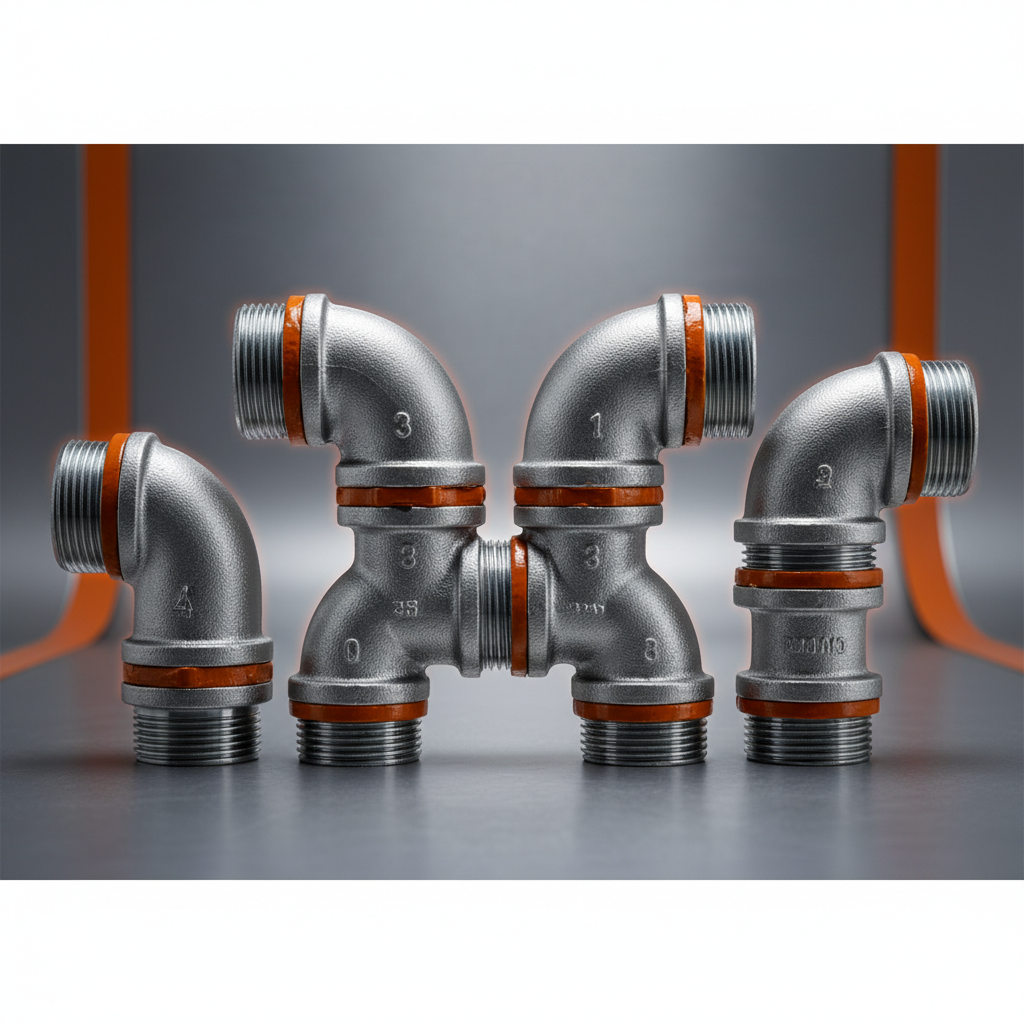
The 90° reducing elbow serves a critical role in pipeline architecture, allowing the flow to change direction while simultaneously transitioning from a larger pipe diameter to a smaller one. This precise geometry is essential for managing fluid velocity and maintaining pressure stability across the network.
Global Standards and Certification in Piping
In the global marketplace, adherence to international standards is not optional; it is a safety imperative. Components manufactured under ISO49 and EN 10242 ensure that threads are compatible across different continents, facilitating seamless installation in international projects. This standardization reduces the risk of mismatched components which could lead to catastrophic system failures.
Certifications such as UL Listed and FM Approved provide a third-party guarantee of quality and reliability. These marks indicate that the fitting has undergone rigorous testing for fire safety and pressure endurance, offering peace of mind to engineers and insurance providers who prioritize risk mitigation in industrial settings.
The integration of these certifications into the production of every pipe and pipe fitting means that the product is suitable for high-stakes applications, including fire sprinkler systems and industrial gas lines, where failure is not an option.
Material Composition and Corrosion Resistance
The longevity of a piping system is determined by its ability to resist oxidation and chemical attack. By utilizing BS EN 1562, EN-GJMB-350-10 material, manufacturers ensure a minimum tensile strength of 300 MPA, providing the structural integrity required for heavy-duty industrial use.
To enhance durability, a robust coating strategy is employed. Whether using black iron or hot-dip galvanization, the goal is to create a barrier against moisture. A zinc coating with an average thickness of 70 um ensures that each pipe and pipe fitting is protected from premature rusting in humid or caustic environments.
Furthermore, the elongation property of 6% minimum allows the fitting to absorb energy and resist cracking under thermal expansion and contraction. This balance of strength and flexibility is what differentiates professional-grade fittings from generic alternatives in the market.
Performance Metrics for High-Pressure Systems
Operating pressure is the primary metric for determining the safety envelope of any fluid system. For malleable cast iron fittings, a working pressure range of 20 to 25 bar (≤PN25) is standard, providing sufficient headroom for most commercial and light industrial applications.
Precision in threading—specifically BSPT and NPT—ensures a leak-proof seal. When the threads of a pipe and pipe fitting are cut to exact tolerances, the mechanical interference creates a tight seal that can withstand high-velocity flow without vibrating loose over time.
Comparative Reliability of Pipe Fitting Materials
Industrial Applications Across Global Sectors
The versatility of the 90° reducing elbow makes it a staple in a variety of sectors. In the HVAC industry, these fittings are essential for routing refrigerant lines through tight spaces while adjusting pipe sizes to maintain optimal flow rates. Their ability to transition fluid flow efficiently reduces turbulence and energy loss.
In remote industrial zones, such as mining camps or oil refineries, the reliance on a durable pipe and pipe fitting is paramount. The ease of threaded connection allows for rapid deployment and repair in the field, minimizing downtime and ensuring that critical resources continue to flow without interruption.
Strategic Advantages of Beaded Connections
Beaded ends provide a distinct advantage in the assembly process by ensuring a more consistent mating surface. This design feature minimizes the risk of cross-threading and ensures that the pressure is distributed evenly across the joint, which is critical when dealing with high-pressure fluid dynamics.
From a cost-efficiency perspective, the use of heavy molds in production allows for a competitive price point without sacrificing the structural integrity of the product. This enables large-scale infrastructure projects to maintain a high safety standard while staying within budgetary constraints.
Moreover, the combination of a beaded end and high-grade zinc coating makes the pipe and pipe fitting virtually maintenance-free for several years, significantly reducing the total cost of ownership for the end-user.
Technical Specification Analysis for Reducing Elbows
Selecting the correct size of a reducing elbow is a balance between flow requirements and space constraints. For instance, transitioning from a 2-inch pipe to a 1-1/2-inch pipe requires a fitting that can handle the resulting increase in fluid velocity without inducing excessive cavitation or noise.
The weight of the fitting is also an indicator of its quality; a heavier wall thickness generally correlates with a higher pressure rating and better resistance to external impacts. Professional installations prioritize these specifications to ensure the system survives the lifespan of the building or facility.
By analyzing the specific weights and dimensions—from the compact 3/4" x 1/2" to the robust 2" x 1-1/2"—engineers can precisely calculate the load on their supports and the overall efficiency of their pipe and pipe fitting network.
Technical Specifications and Weight Distribution of Reducing Elbows
|
Item Model
|
Size (Inch)
|
Weight (KG)
|
Pressure Rating
|
| ERL0705 |
3/4 X 1/2 |
0.116 |
≤PN25 |
| ERL1005 |
1 X 1/2 |
0.153 |
≤PN25 |
| ERL1007 |
1 X 3/4 |
0.175 |
≤PN25 |
| ERL1207 |
1-1/4 X 3/4 |
0.228 |
≤PN25 |
| ERL1210 |
1-1/4 X 1 |
0.273 |
≤PN25 |
| ERL2015 |
2 X 1-1/2 |
0.651 |
≤PN25 |
FAQS
Yes, our malleable cast iron fittings are designed for working pressures between 20 to 25 bar (≤PN25). With certifications like UL and FM, they meet the rigorous safety standards required for many industrial gas and fire suppression systems. However, always verify your specific system requirements against the PN25 rating to ensure a safe margin of operation.
BSPT (British Standard Pipe Taper) and NPT (National Pipe Taper) are both tapered threads used to create a seal, but they have different thread angles and pitches. BSPT typically has a 55° angle, while NPT uses a 60° angle. It is critical to use the correct thread type to avoid leaks and prevent damage to the fitting's integrity.
Hot-dip galvanization involves coating the iron with a layer of zinc. This zinc layer acts as a sacrificial anode, meaning it will corrode before the underlying iron does. With an average coating thickness of 70 um, it provides a powerful barrier against rust and chemical oxidation, significantly extending the service life of the installation.
Absolutely. We offer both our own brand and OEM services to meet the specific branding requirements of our clients. With over 30 years of experience in the casting field, we can ensure that your branded products maintain the same high standards of quality and certification (UL/FM/SGS) as our standard line.
Our standard delivery time is approximately 35 days upon receipt of the advanced payment. We pride ourselves on efficient service and strive to reply to all inquiries within 4 hours to ensure your project timeline remains on track. Fast delivery and quality control are our top priorities.
We provide a minimum guarantee of 1 year for our products. This warranty covers manufacturing defects and ensures that the fitting meets the promised material and pressure specifications. Given the high-grade malleable iron and zinc coating used, most of our fittings far exceed this minimum lifespan in standard industrial environments.
Conclusion
The selection of a high-quality pipe and pipe fitting is a fundamental decision that impacts the safety, efficiency, and longevity of any industrial fluid network. By combining the ductility of malleable cast iron with rigorous international standards like ISO49 and EN 10242, and enhancing it with professional hot-dip galvanization, these components provide a reliable solution for complex piping challenges.
As industries move toward more sustainable and automated infrastructure, the demand for precision-engineered fittings that minimize leaks and reduce maintenance costs will only grow. Investing in certified, high-tensile fittings today ensures a safer operational environment for the future. Visit our website for more professional solutions: www.pannextfittings.com