Navigating the complexities of international piping standards often leads engineers and procurement specialists to a critical crossroads: understanding the nuances of british standard thread vs npt. In the world of industrial fluid conveyance, a mismatch between a British Standard Pipe Taper (BSPT) and a National Pipe Taper (NPT) can lead to catastrophic leaks or structural failure, making this distinction a cornerstone of mechanical safety.
The global nature of the manufacturing supply chain means that a single project might utilize components from Europe, North America, and Asia. Consequently, the ability to differentiate between british standard thread vs npt is not merely a technical detail but a strategic requirement for ensuring system integrity and operational efficiency across different regulatory zones.
By analyzing the geometric differences, sealing mechanisms, and regional adoption rates, this guide provides a comprehensive comparison of british standard thread vs npt. Whether you are specifying malleable cast iron pipe fittings for a high-pressure system or maintaining legacy infrastructure, understanding these threading standards ensures your components fit perfectly and perform reliably under pressure.
The Fundamental Differences of British Standard Thread vs NPT
At its core, the comparison of british standard thread vs npt is a study in angular geometry. The British Standard Pipe Taper (BSPT) features a thread angle of 55 degrees, which is characteristic of the Whitworth thread family. This design is widely utilized across Europe and the Commonwealth, providing a robust seal when paired with compatible mating parts.
Conversely, the National Pipe Taper (NPT) employs a 60-degree thread angle, a standard primarily rooted in American industrial practices. While they may look identical to the naked eye, this 5-degree difference prevents them from being interchangeable. Attempting to force an NPT fitting into a BSPT port can strip the threads and compromise the pressure-bearing capacity of the joint.
Technical Geometry and Pitch Analysis
When diving deeper into the technical specs of british standard thread vs npt, the "pitch" or the distance between thread crests becomes the deciding factor. BSPT threads are measured in threads per inch (TPI), but the actual diameter and pitch differ slightly from the NPT equivalents. For example, a 1/2" BSPT fitting will not securely mate with a 1/2" NPT fitting because the pitches do not align.
The taper itself is also a point of divergence. Both are tapered to create a seal via "interference fit," meaning the threads wedge together as they are tightened. However, the rate of the taper and the resulting contact area vary. In NPT systems, the sealing is achieved primarily by the crushing of the thread flanks, whereas BSPT relies on a combination of flank contact and sealant.
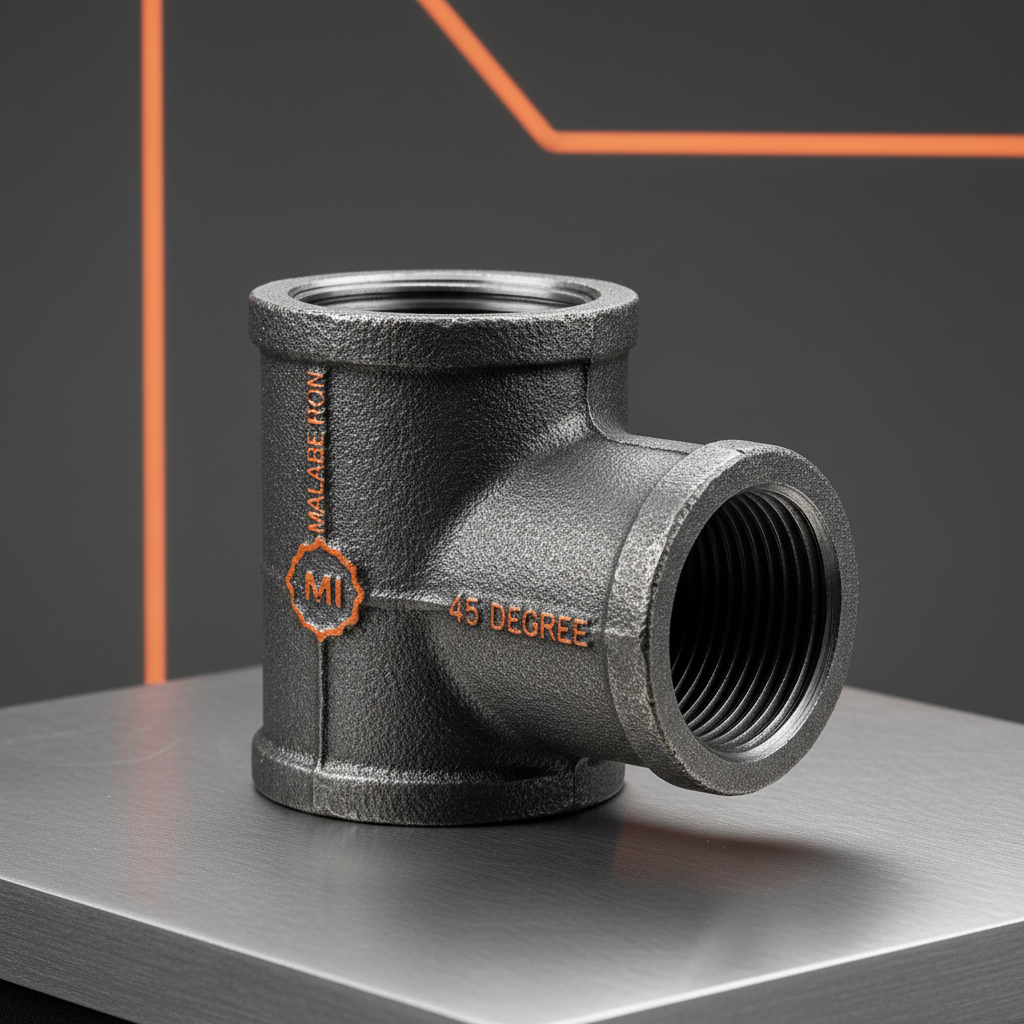
For professionals dealing with malleable cast iron pipe fittings, such as the 45° long sweep bends, specifying the correct thread is vital. Since these products are often manufactured to both ISO 49/EN 10242 (BSPT) and NPT standards, verifying the thread profile ensures that the 20-25 bar working pressure is maintained without leakage.
Material Compatibility and Sealing Integrity
Understanding the relationship between british standard thread vs npt is essential when choosing materials like BS EN 1562 (EN-GJMB-350-10) malleable iron. The material's tensile strength (minimum 300 MPA) ensures that the threads can withstand the torque required to create a leak-proof seal, regardless of which standard is chosen.
The sealing integrity in the context of british standard thread vs npt depends heavily on the use of PTFE tape or pipe dope. Because NPT threads have a steeper angle, they often require more sealant to fill the gaps between the 60-degree flanks, whereas the 55-degree BSPT threads offer a different contact profile that may behave differently under thermal expansion.
Ultimately, the choice between british standard thread vs npt should be dictated by the existing infrastructure. Mixing these standards in a single pipeline without proper adapters can lead to "false seals," where the fitting feels tight but fails under the rated PN25 pressure.
Performance Metrics in High-Pressure Environments
In high-pressure applications, such as those utilizing Class 300 pipe fittings, the mechanical stability of the thread is paramount. The debate of british standard thread vs npt often comes down to how each handles hoop stress and vibration. BSPT is frequently praised for its reliability in hydraulic systems across Europe, while NPT remains the gold standard for North American oil and gas installations.
To visualize the effectiveness of these standards, we can look at their relative performance in terms of ease of installation, seal reliability, and global availability. While both are highly effective when matched correctly, their "rating" depends on the regional ecosystem they operate within.
Comparative Reliability of British Standard Thread vs NPT
Global Industrial Adoption and Standards
The regional dominance of british standard thread vs npt is a reflection of historical industrialization. The UK and its former colonies predominantly use BSPT, which is now governed by ISO 7-1. This ensures that a pipe fitting manufactured in a UL-listed factory in Asia will fit perfectly into a system in London or Singapore.
Meanwhile, the US and Canada lean heavily on ANSI/ASME B1.20.1 for NPT specifications. In the context of global trade, manufacturers of malleable pipe fittings must be proficient in both to serve a diverse clientele. Offering both BSPT and NPT options allows a factory to maintain a competitive edge and ensure that their products are "plug-and-play" for any global project.
Common Pitfalls in Thread Identification
One of the most frequent errors in the field is the assumption that all tapered threads are identical. When workers confuse british standard thread vs npt, they often rely on "feel" rather than measurement. A BSPT male fitting may enter an NPT female port for a few turns, leading the installer to believe it is correct, only for it to leak under pressure due to the mismatched thread angle.
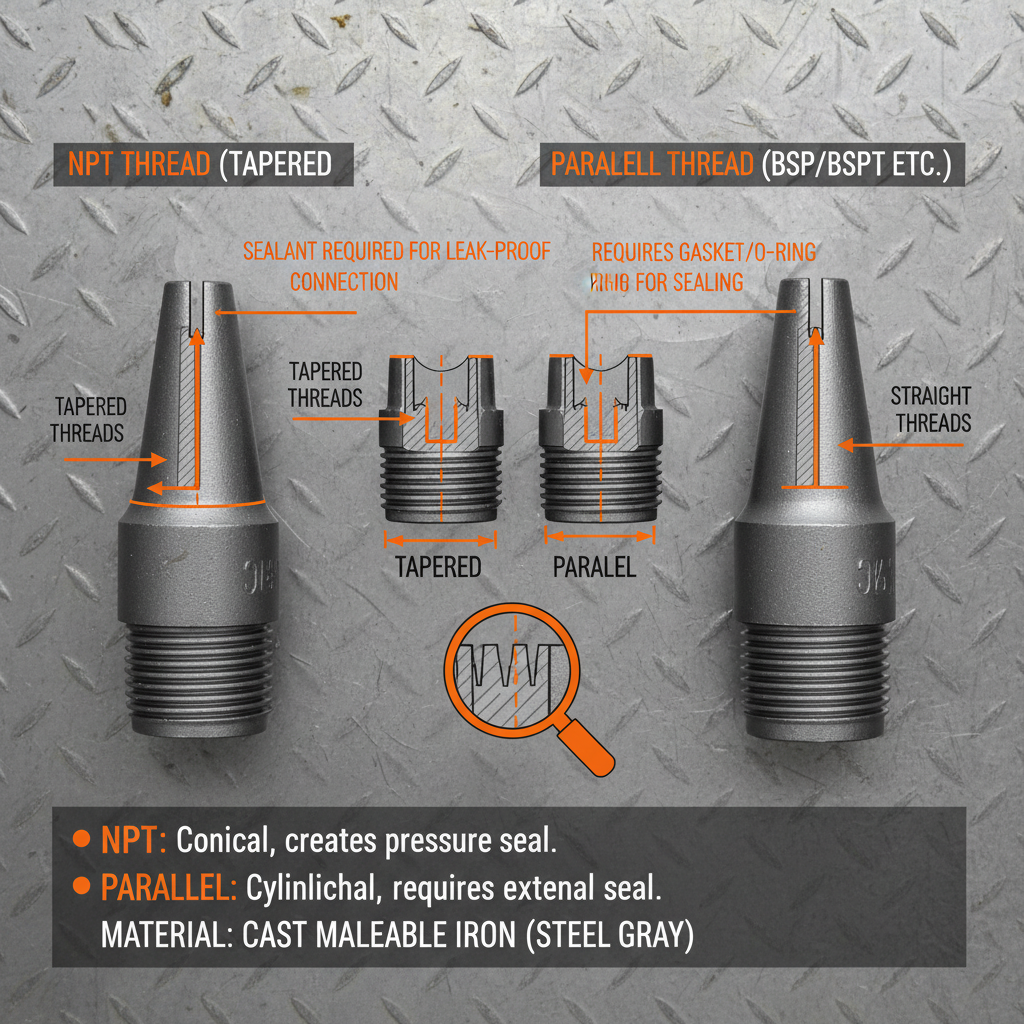
Another common pitfall is the confusion between BSPT (Tapered) and BSPP (Parallel). While the BSPT vs NPT debate focuses on the angle and pitch of tapered threads, introducing parallel threads into the mix adds another layer of complexity. Parallel threads require a gasket or O-ring to seal, whereas both BSPT and NPT rely on the taper.
To avoid these errors, the use of thread gauges is non-negotiable. By verifying the pitch and angle, technicians can definitively distinguish between british standard thread vs npt before assembly, saving hours of rework and preventing costly downtime in industrial environments.
Selection Guide for Malleable Iron Fittings
Selecting the right fitting, such as a 45° male and female long sweep bend, requires a clear understanding of british standard thread vs npt. For systems requiring maximum corrosion resistance, hot-dip galvanized finishes are recommended, but the thread choice remains the primary factor for leak prevention.
If your project adheres to ISO 49 or EN 10242 standards, BSPT is the mandatory choice. If the project is based on American standards, NPT is required. The flexibility of modern manufacturers to provide both options ensures that the 1/2" to 1-1/2" size range can be tailored to the specific regional needs of the client.
Ultimately, the decision between british standard thread vs npt is a matter of compliance and safety. Using certified products with UL and FM approval ensures that regardless of the thread standard, the fitting meets stringent safety requirements for pressure and durability.
Technical Comparison Summary: British Standard Thread vs NPT
| Feature Dimension |
BSPT (British Standard) |
NPT (American Standard) |
Impact on Fitting |
| Thread Angle |
55 Degrees |
60 Degrees |
Incompatibility/Leaking |
| Pitch Standard |
Whitworth |
Unified (UN) |
Cross-threading Risk |
| Primary Region |
Europe / Asia / UK |
North America |
Supply Chain Logistics |
| Sealing Method |
Tapered Interference |
Tapered Interference |
Requires Sealant/Tape |
| Standard Reference |
ISO 7-1 / EN 10242 |
ASME B1.20.1 |
Regulatory Compliance |
| Common Material |
Malleable Iron / Brass |
Malleable Iron / Steel |
Material Strength Sync |
FAQS
No, it is strongly discouraged. Because of the difference in thread angle (60° vs 55°) and pitch, an NPT fitting will not create a proper seal in a BSPT port. While it might screw in partially, it will likely leak under pressure and may permanently damage the threads of the port, leading to expensive repairs.
Visually, they are almost identical. The only way to be certain is to use a thread pitch gauge or a calibrated ring gauge. The gauge will reveal if the thread angle is 55 or 60 degrees and whether the threads per inch match the specific standard for that nominal size.
Neither is inherently "better"; effectiveness depends on the mating part. Both are designed for pressure-tight seals. However, for fittings like our long sweep bends rated at 20-25 bar, the "better" option is the one that matches your existing pipeline standard to ensure a secure, leak-free connection.
No. BSPT (Tapered) is designed to seal by wedging the threads together, whereas BSPP (Parallel) has a straight profile and requires a gasket, washer, or O-ring to achieve a seal. Mixing Tapered and Parallel threads will result in failure.
A standard hot-dip galvanized coating (average 70 um) is designed to provide corrosion protection without interfering with the thread's functional geometry. As long as the fitting is manufactured to the correct tolerance, the coating will not prevent a proper BSPT or NPT seal.
The only safe solution is to use high-quality adapter fittings. An adapter converts the thread profile from BSPT to NPT (or vice versa). Never attempt to "force" a fit with extra sealant; always use a dedicated adapter to maintain the structural integrity of the system.
Conclusion
The distinction between british standard thread vs npt is a critical technical detail that separates a secure industrial installation from a potential hazard. From the 5-degree difference in thread angle to the variations in pitch and regional adoption, these factors dictate the safety, longevity, and efficiency of fluid transport systems. By prioritizing the correct standard—whether it be ISO 49 for BSPT or ASME B1.20.1 for NPT—and utilizing certified malleable iron fittings, engineers can ensure their systems operate reliably at the required PN25 pressure levels.
Looking forward, the trend toward global standardization continues, but the legacy of these two systems remains firmly entrenched. For procurement teams and project managers, the key to success lies in rigorous specification and the use of trusted manufacturers who provide UL and FM approved components in both standards. We recommend always verifying thread profiles with gauges before installation to eliminate the risk of costly errors. Visit our website for a full range of professional pipe fittings: www.pannextfittings.com