Selecting the correct components for fluid transport is critical for the structural integrity of any piping system. Whether in industrial manufacturing or residential construction, understanding the various types of plumbing pipe fittings ensures that connections are leak-proof, durable, and compliant with international safety standards.
The global demand for high-performance piping solutions has led to the development of specialized materials, such as malleable iron and bronze, which offer superior strength and corrosion resistance. By analyzing the technical specifications of different fittings, engineers can optimize flow dynamics and reduce long-term maintenance costs in complex networks.
For professionals seeking reliable infrastructure, choosing the right types of plumbing pipe fittings is the first step toward ensuring operational safety and system longevity.
Global Industry Standards for Malleable Iron Fittings
In the modern industrial landscape, adherence to international standards is not optional; it is a requirement for safety and interoperability. The use of ASME B16.3 standards ensures that malleable iron pipe fittings maintain a consistent geometry and strength profile, allowing them to be integrated into global supply chains without compatibility issues.
Furthermore, certifications such as FM Approved and UL Listed provide an essential layer of trust for engineers and contractors. These certifications verify that the fittings can withstand rigorous pressure tests and environmental stressors, reducing the risk of catastrophic failure in critical plumbing and fire protection systems.
Material Composition and Technical Specifications
The core of any high-quality fitting lies in its metallurgy. Malleable iron ASTM A197 is utilized for its exceptional balance of ductility and strength, preventing the brittleness often associated with standard cast iron. This material allows the fittings to absorb shocks and vibrations within the piping system without cracking.
To combat oxidation and environmental degradation, surface treatments are paramount. Hot-dip galvanized coatings provide a thick layer of zinc protection—averaging 86 um—which is essential for installations in humid or corrosive environments. For applications where galvanization is not required, black iron finishes provide a robust alternative for oil and gas transport.
Technical precision is further evidenced by a minimum tensile strength of 28.4 kg/mm and a minimum elongation of 5%. These parameters ensure that the fittings maintain their structural integrity under a working pressure of 300 P.S.I., even when subjected to temperatures as high as 550° F.
Critical Factors for Selecting Pipe Fittings
When evaluating different types of plumbing pipe fittings, the primary consideration must be the working pressure of the system. A Class 300 fitting is specifically designed for higher-pressure environments, providing a safety margin that prevents leaks and blowouts during pressure surges.
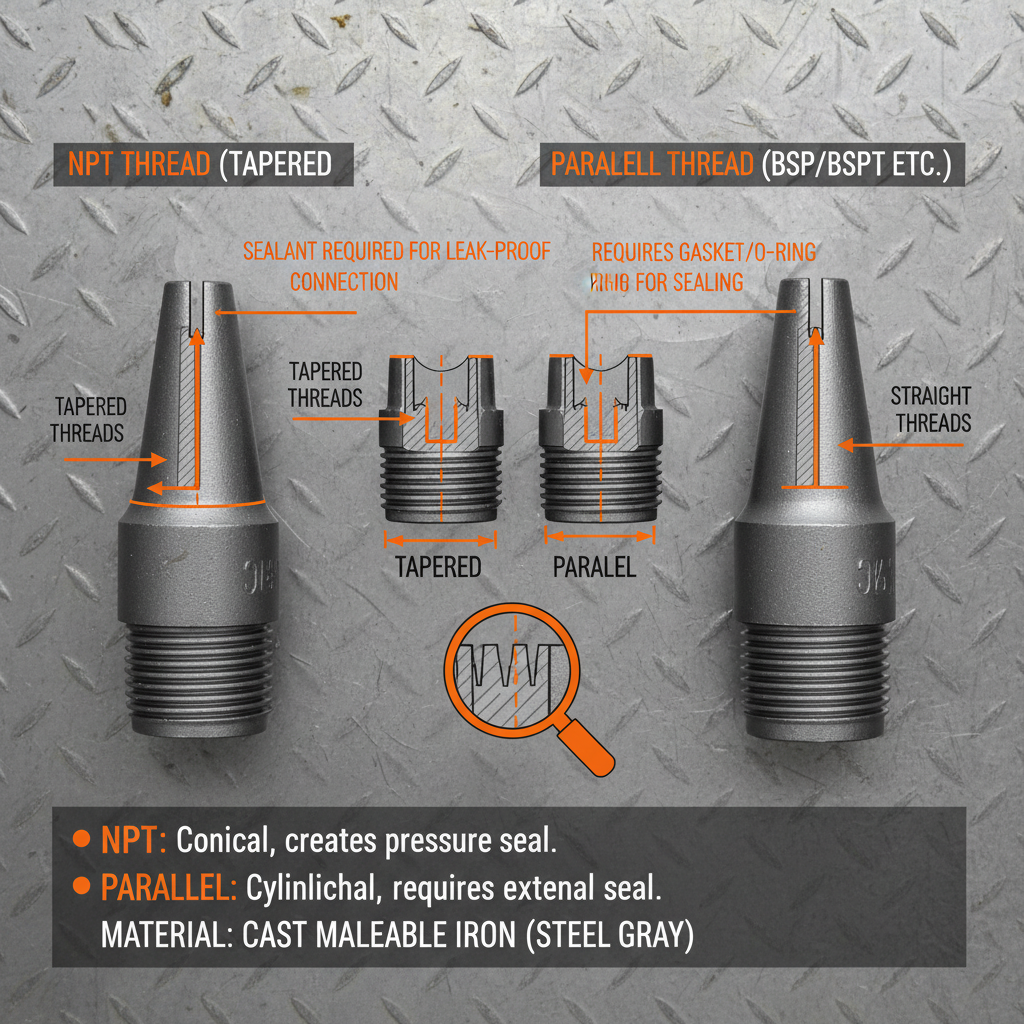
Threading standards also play a pivotal role in selection. Depending on the regional requirement, the choice between NPT (National Pipe Tapered) and BS21 threads determines how the types of plumbing pipe fittings will seal and connect, impacting the overall airtightness of the assembly.
Finally, the environmental exposure dictates the surface finish. While black iron is suitable for indoor, dry environments, hot-dip galvanized fittings are the industry standard for outdoor or moisture-heavy zones, ensuring that the types of plumbing pipe fittings do not succumb to rust.
Performance Analysis of Class 300 Fittings
The performance of Class 300 malleable iron fittings is measured by their ability to maintain a seal under extreme thermal and mechanical stress. With a working pressure rating of 10 kg/cm at 550° F, these components are ideal for steam lines and high-temperature industrial fluids.
Comparing these to lower-class fittings reveals a significant jump in reliability. The increased wall thickness and refined casting process reduce the probability of pinhole leaks, making them the preferred choice for mission-critical infrastructure where downtime is costly.
Comparative Reliability Rating of Various Pipe Fitting Classes
Real-World Applications in Industrial Piping
In large-scale manufacturing plants, the reliability of pipe connections is paramount. Malleable iron fittings are extensively used in compressed air systems and fire sprinkler networks, where the FM and UL certifications ensure that the system will function perfectly during an emergency.
Beyond heavy industry, these fittings are vital in commercial HVAC systems. Their ability to handle temperature fluctuations without expanding or contracting excessively makes them ideal for chilled water and steam heating loops in high-rise buildings across North America and Europe.
Long-Term Value and Durability Benefits
Investing in high-grade malleable iron fittings provides immense long-term economic value. By reducing the frequency of replacements and eliminating the need for costly leak repairs, these components lower the total cost of ownership over the system's lifecycle.
The psychological peace of mind provided by a one-year minimum warranty and strict adherence to ASTM A197 material standards cannot be overstated. Facility managers can operate their systems with confidence, knowing that the fittings are engineered for longevity.
Furthermore, the sustainable nature of iron—being highly recyclable—aligns with modern green building initiatives. Using durable fittings reduces waste by extending the time between infrastructure overhauls, contributing to a more sustainable industrial footprint.
Future Innovations in Pipe Fitting Manufacturing
The future of pipe fitting manufacturing is leaning toward enhanced precision through automation and digital twin technology. By simulating fluid dynamics and stress points before the casting process, manufacturers can further optimize the wall thickness and thread precision of malleable iron components.
We are also seeing a shift toward more advanced zinc-alloy coatings that provide even greater corrosion resistance than traditional hot-dip galvanization. These innovations aim to extend the lifespan of fittings in extreme saltwater or chemical-heavy environments.
As sustainability becomes a global mandate, the integration of low-carbon casting methods is becoming a priority. The industry is moving toward energy-efficient furnaces and recycled raw materials without compromising the tensile strength or pressure ratings required for Class 300 systems.
Technical Specifications and Dimensions of Malleable Iron Fittings
| Item Model |
Size (Inch) |
Dimension A (mm) |
Weight (Gram) |
| H-L4502 |
1/4 |
20.6 |
73 |
| H-L4505 |
1/2 |
25.4 |
175 |
| H-L4510 |
1 |
33.3 |
442 |
| H-L4520 |
2 |
50.8 |
1493.3 |
| H-L4530 |
3 |
64.0 |
3335 |
| H-L4540 |
4 |
71.0 |
5680 |
FAQS
We are a professional casting factory with more than 30 years of specialized experience in the production of high-quality malleable iron pipe fittings, ensuring direct control over material quality and manufacturing precision.
We accept T/T or L/C payment methods. Our standard terms require a 30% down payment up front to initiate production, with the remaining 70% balance due before shipment.
The typical lead time for delivery is 35 days after the advance payment has been received, depending on the order volume and shipping destination.
Yes, we encourage clients to verify our quality. We provide no-cost trials for samples, allowing you to test the fit and finish before committing to a large-scale order.
All our pipe fittings come with a minimum warranty of one year, covering manufacturing defects and ensuring that the product meets the promised technical specifications.
Class 300 fittings are engineered for higher pressure environments, capable of handling 300 P.S.I. and temperatures up to 550° F, offering significantly higher safety margins and durability than standard lower-class fittings.
Conclusion
Understanding the technical nuances of malleable iron fittings—from ASTM A197 material composition to the critical importance of FM and UL certifications—is essential for anyone designing modern piping systems. By prioritizing pressure ratings, surface treatments like hot-dip galvanization, and precision threading, users can ensure their infrastructure is safe, efficient, and built to last.
As the industry evolves toward more sustainable and precise manufacturing, the reliance on high-performance Class 300 fittings will only grow. We recommend partnering with experienced casting factories to guarantee that every component meets strict quality standards. Visit our website for more professional solutions: www.pannextfittings.com