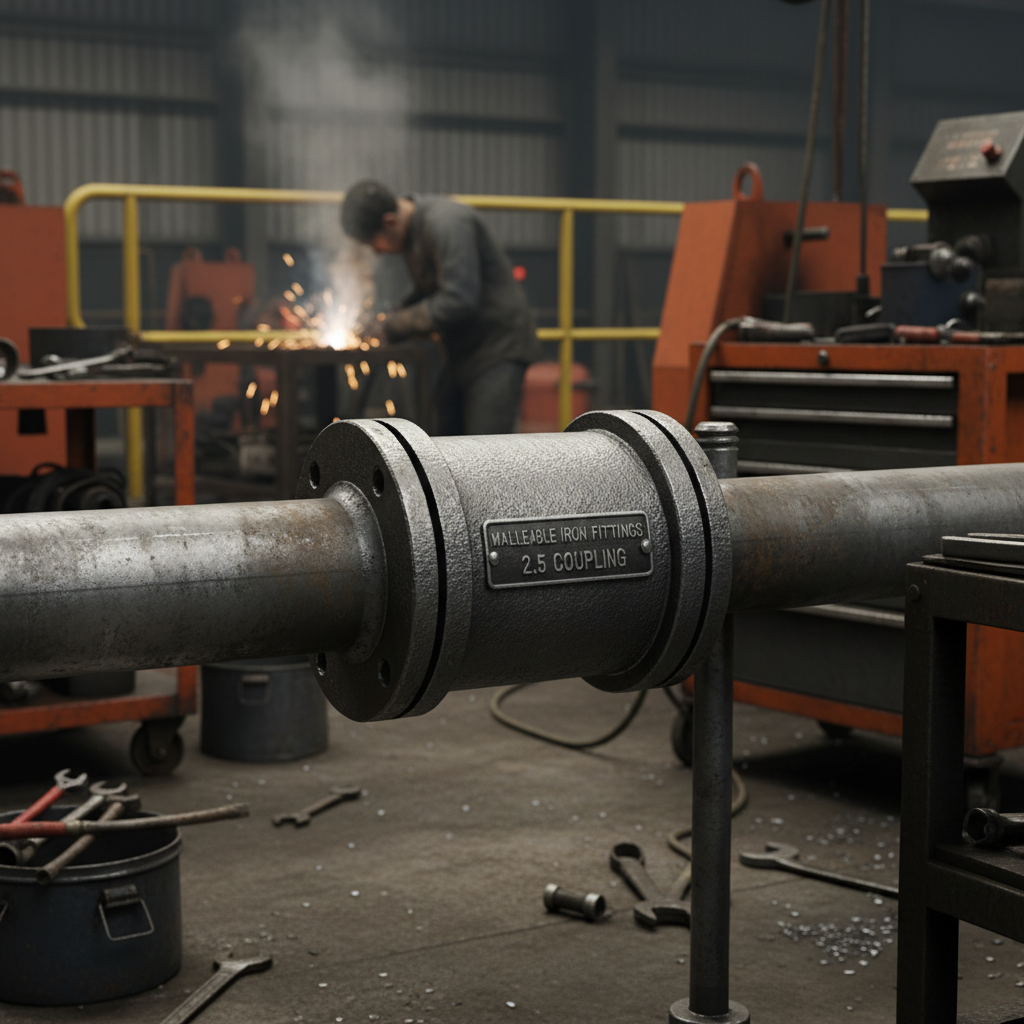
Choosing the right malleable iron fittings suppliers is critical for ensuring the structural integrity and safety of industrial piping systems. These components serve as the essential joints that manage fluid flow and pressure across diverse environments, from water distribution to complex chemical processing plants.
Many procurement teams struggle with balancing cost and quality, often facing issues like leakage, thread failure, or material degradation. These pain points highlight the necessity of partnering with manufacturers who adhere to strict international standards like ASTM and ASME to minimize operational downtime.
This comprehensive guide will analyze the technical specifications, procurement criteria, and performance metrics of high-grade malleable iron fittings. By the end of this article, you will understand how to evaluate suppliers based on certification, production capacity, and quality control systems.

1Understanding Malleable Iron Fitting Standards

Malleable iron is produced through a specialized annealing process that transforms brittle cast iron into a material that can be bent or hammered without breaking. For professional buyers, understanding the distinction between standard malleable iron and other alloys is the first step in ensuring system compatibility.
Standardization is not merely about fit; it is about safety. Fittings that meet international benchmarks are tested for tensile strength and elongation, which prevents catastrophic failure under high-pressure surges. This is why certifications like UL and FM are highly valued in the industry.
When evaluating malleable iron fittings suppliers, verify their compliance with ASTM B62 or ASTM B824 for bronze and alloy options, as these determine the chemical composition and resulting durability of the product in corrosive environments.
2Core Technical Attributes and Material Properties
The performance of a pipe fitting is dictated by its metallurgical properties. Malleable iron provides a unique balance of ductility and strength, making it superior to grey iron in applications involving vibration or mechanical stress.
Beyond strength, the precision of the threading process is paramount. High-performance suppliers utilize automated threading machines and Gages for in-process checking to ensure that every fitting provides a tight, consistent seal without over-torquing.
The manufacturing process, including molding and rotary cooling, must be strictly controlled. Any inconsistency in the molten iron temperature can lead to internal porosities, which are often invisible to the naked eye but fail under water pressure tests.
3Critical Application Scenarios in Modern Piping
Malleable iron fittings are widely deployed in jointing water pipes, HVAC systems, and low-pressure steam lines. Their versatility allows them to be used in both residential plumbing and heavy industrial infrastructure where reliability is non-negotiable.
In commercial construction, these fittings are preferred for their ease of installation and long-term stability. Whether utilizing Compression Couplings or Standard Malleable Iron Pipe Fittings, the goal is to create a secure connection that resists thermal expansion and contraction.
Specialized options, such as Class 300 Pipe Fittings, are utilized when higher pressure ratings are required, providing an increased safety margin for critical fluid transport systems in industrial plants.
4Evaluating Performance and Quality Metrics
Quantifying the quality of a supplier requires a look at their Quality Control (QC) system. A rigorous SOP should cover every stage, from raw material inspection to final 100% water pressure testing before the products enter the warehouse.
Comparing an average supplier to a premium manufacturer reveals significant differences in failure rates and seal integrity. Premium suppliers often invest in advanced automated production lines, such as the DISA system, to ensure consistency across thousands of units.
malleable iron fittings suppliers Performance Metrics
The data indicates that precision in threading and material purity directly correlates with a reduction in onsite leaks. When a supplier provides guaranteed testing reports for every batch, the risk of project delays due to component failure is significantly reduced.
5Procurement Guide for Industrial Suppliers
When sourcing from malleable iron fittings suppliers, procurement officers should evaluate the factory's capacity and historical expertise. A facility with over 30 years of experience typically possesses the R&D capability to handle custom specifications and complex orders.
Logistical efficiency is another deciding factor. Suppliers located near major international airports or seaports can drastically reduce lead times, which is essential for meeting tight construction schedules.
Finally, consider the payment and sample terms. Reputable factories offer free samples for quality verification and support standard trade terms like T/T or L/C, providing financial security for the buyer.
6Innovations in Coating and Corrosion Protection
One of the primary limitations of iron is its susceptibility to rust. To combat this, the industry has shifted toward advanced coated pipe fittings and bronze alloys that provide natural resistance to oxidation in harsh environments.
The application of protective coatings not only extends the lifespan of the fitting but also reduces the maintenance frequency for the end-user. This is particularly important in underground piping where access for repairs is difficult and costly.
Innovations in bronze pipe fittings, utilizing alloys like C83600, offer a high-strength alternative for water systems where corrosion resistance is the highest priority, effectively eliminating the need for external coatings.
7Comparative Analysis of Pipe Fitting Options
Choosing between different fitting types requires a trade-off analysis between cost, installation speed, and pressure requirements. While standard malleable iron is cost-effective, bronze and coated options are necessary for specific environments.
The following table compares the most common options available from top-tier malleable iron fittings suppliers to help you make an informed selection based on your project's operational constraints.
| Fitting Type | Best Use Case | Main Strength | Primary Limitation |
|---|---|---|---|
| Standard Malleable | General Water Lines | Cost Efficiency | Corrosion Risk |
| Bronze Fittings | Marine/Chemical | Extreme Durability | Higher Initial Cost |
| Coated Fittings | Outdoor/Damp | Oxidation Resistance | Coating Wear |
| Class 300 | High Pressure | Increased Safety | Heavier Weight |
| Compression | Quick Assembly | Fast Installation | Lower Pressure Max |
| Quick Connect | Temporary Lines | Rapid Changeover | Seal Longevity |
Ultimately, the decision should be based on a total cost of ownership (TCO) approach, where the initial purchase price is weighed against the expected maintenance and replacement costs over the system's lifecycle.
Frequently Asked Questions
Conclusion
Selecting the right malleable iron fittings suppliers is a strategic decision that affects the longevity and safety of any piping infrastructure. By prioritizing manufacturers with strong certifications, verified material properties, and a rigorous testing SOP, you can eliminate the risks of leakage and premature failure.
For procurement teams and engineers evaluating high-performance solutions for their next project, detailed technical specifications and available product ranges can be reviewed at www.pannextfittings.com to ensure total system compatibility.